
By David Mullen
ESPN’s Scott Van Pelt is the last remaining “SportsCenter” anchor who connects veteran sports viewers to the show’s original style. Each “SportsCenter” was filled with highlights and information, and it was unthinkable to go a day without watching Chris Berman, Dan Patrick, Keith Olberman, Linda Cohn, Kenny Mayne, Stuart Scott and others provide the latest sports news. The show was must-see sports TV.
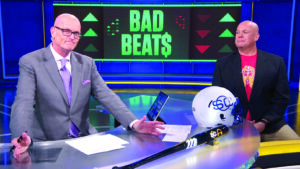
Photo courtesy of ESPN
Van Pelt is a reminder that ESPN once lived up to its self-proclaimed moniker as the “worldwide leader in sports.” Van Pelt joined ESPN in 2001 and remains very popular. He is a contrarian to the new wave of yelling, ill-informed, LeBron James sycophant personalities on ESPN that are recognizable only by their slim fit dress suits offset by shiny, white sneakers.
Once wearing brown shoes with a dark suit was a fashion faux pas; now a $200 pair of gleaming Air Jordans is accepted as semi-formal footwear.
But even Van Pelt has adapted his broadcast format — if not his wardrobe — for the times. SVP, as he is known by his faithful, has a signature segment called “Bad Beats,” normally showing on Monday nights. It is a funeral dirge for sports gamblers, full of buzzer beaters and missed foul shots that turn a point spread or score total into a winner or loser.
It is an entertaining 10 minutes, even for those that prioritize their personal funds toward living and not losing. The “Bad Beats” segment, which includes betting analyst “Stanford Steve” Coughlin, is just one example of how sports betting has completely changed sports viewing.
Until recently, the mere mention of a point spread during the broadcast of a live sporting event was strictly prohibited, like wearing tennis shoes with a suit.
Now the gambling industry is a major source of income for sports networks, professional and college leagues and sports teams. All professional and college sports teams, chartered with strict league rules against gambling, now team up with online betting services and brick and mortar casinos to encourage their fans to bet at every opportunity.
The single most wagered sporting event of the year for legal sportsbooks in Nevada, 37 other states plus Washington D.C. and Puerto Rico, will be Super Bowl LX, on Sunday, Feb. 8, at Levi’s Stadium in Santa Clara, Calif. Although the game between the Seattle Seahawks and New England Patriots is not considered a marquee matchup, which may affect overall betting numbers, up to $2 billion is expected to be wagered legally and most of the money will be bet online.
Despite the efforts of Dallas Mavericks owner Miriam Adelson and family, who desperately want to bring their Sands Casino property to Texas and believe owning the Mavs will provide leverage in getting state laws reversed, sports gaming in Texas is illegal.
Some online gamblers say that they can’t watch a game without making a bet. This sounds like an excuse covering an addiction, but the leagues and networks are complicit. Virtually every pregame show in any professional sport will have announcers discussing prop bets. Former TNT and now ESPN’s NBA studio hosts Kenny Smith and Charles Barkley have an online sportsbook-sponsored segment about ways to parlay player performances during the game. They make it sound easy.
Kalshi Inc., a web-based prediction betting platform, took in nearly $50 million in bets this season on NFL broadcast verbiage applied during games. If an announcer mentioned “Taylor Swift” during a Kansas City Chiefs game, it was possible for gamblers to receive a payout.
For the Super Bowl, through Kalshi, one can bet on the halftime show and if Bad Bunny’s playlist will include “LA MuDANZA,” “Me Porto Bonito” and “Ojitos Lindos.” Ay, Caramba! These bets can be easily manipulated and are basically unpoliced.
In Las Vegas alone, more than $150 million was bet at sportsbooks on Super Bowl LIX last year. The casinos made 14.6 percent in profit or more than $22.1 million on bets on one game. Losing bets almost always exceed winning bets. Casinos don’t build opulent properties based on their losses.
The NFL has issued a six-ad limit on sports betting advertisements during the Super Bowl broadcast from the pregame until the end of the broadcast. Fanatics Sportsbook, DraftKings, BetMGM and FanDuel are all expected to advertise during the Super Bowl LX broadcast. With NBC charging more than $8 million per 30-second ad, NBC and by association the NFL, will bring in $50 million. Not really taking a hardline on the nation’s betting plague with a six-ad limit on sportsbooks.
Betters in the Super Bowl office or local tavern squares, where numbers are determined by a random draw, seem insolated. But according to reports, “up to 10 million Americans are estimated to have a severe gambling problem or are at risk of developing one, driven by the rapid growth of sports betting.”
The Seahawks are 4.5-point favorites over New England. Some gamblers will win, but most bettors will lose on their parlay and prop bets. And Las Vegas and online gambling services will be there to celebrate the bettor’s “Bad Beats.”

Leagues complicit in surge of sports gambling added by whiterocklakeweeklyadmin on
View all posts by whiterocklakeweeklyadmin →