
By Beth Leermakers
If you’ve ever wondered why your cat turns up her nose at veggies but goes wild for meat, there’s a good reason. Cats aren’t just picky — they’re obligate carnivores with very specific nutritional needs shaped by thousands of years of hunting. Understanding what cats must eat (and what they should never eat) is one of the best ways to support their health, energy and longevity.
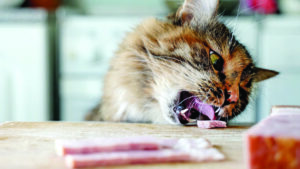
What Cats Must Eat: Meat
Cats are obligate carnivores, meaning they must eat meat to survive because they need nutrients found only in animal products. Cats evolved as hunters that consume prey containing high amounts of protein, moderate amounts of fat and a minimal amount of carbohydrates. A feline diet still requires these general proportions today. According to a professor at the Texas A&M College of Veterinary Medicine & Biomedical Sciences, the best way to mimic a cat’s natural diet is to feed them canned food that has a protein content of 40 percent or higher and a carbohydrate content of 10 percent or lower.
Here’s why cats need a high protein (meat), low carb diet:
Cats can’t synthesize essential nutrients like taurine, Vitamin A or arachidonic acid from plant matter. They must get these nutrients directly from animal sources.
Cats’ livers are permanently “switched on” to break down protein for energy. If they don’t get enough dietary protein, their bodies will begin to break down their own muscle tissue. Cats lack the digestive enzymes, such as salivary amylase, needed to process large amounts of carbohydrates efficiently.
What Cats Must NOT Eat
Keep these harmful foods away from your cat:
Raw fish, meat, poultry or eggs. While their bodies are designed for meat, eating it raw can be risky. The American Veterinary Medical Association (AVMA) discourages feeding any raw or undercooked animal-sourced protein (e.g., meat, poultry, fish, egg, milk) to cats and dogs because of their risk to human and animal health.
Raw or undercooked animal-sourced protein may be contaminated with a variety of pathogenic organisms, including Salmonella, E. coli and campylobacter. Cats and dogs may develop foodborne illness after being fed animal-sourced protein contaminated with these organisms.
Dairy. As cats mature, most lose their ability to properly break down milk. When these lactose intolerant cats drink milk, it causes gastrointestinal upset that can lead to flatulence, abdominal pain, vomiting and diarrhea.
Toxic Substances:
Onions and garlic. Anything in the Allium family — including onions, garlic, shallots and chives — is poisonous to cats. Onion toxicity causes significant stomach upset and damages your cat’s red blood cells. This damage puts the red blood cells at risk for rupturing, causing life-threatening anemia.
According to PetMD, even a small amount of onion can cause stomach upset, but the most severe signs occur when the cat ingests a toxic dose — more than 5 grams of onions per kilogram of their body weight, or 0.5 percent of their body weight in kilograms. Onion powder is more potent than an onion, so even small amounts of onion powder can be toxic. Cooked onions are as toxic to cats as the raw onions, so keep your cat away from sauces, soups, gravy, pizza and any other food containing onions or onion powder.
Chocolate. Chocolate contains theobromine and caffeine, stimulants called methylxanthines that are toxic to cats. The darker a chocolate is, the more methylxanthines it usually contains. So dark chocolate is more dangerous than milk chocolate.
Caffeinated drinks. Caffeine causes the release of hormones produced by the adrenal glands, leading to increased heart rate, hyperactivity and muscle tremors. Cats are highly sensitive to caffeine and can’t metabolize it well, so even small amounts can be toxic.
Alcohol. Most types of alcohol contain ethanol and grain, which are toxic to cats. Alcohol poisoning can occur when your cat drinks just one teaspoon. When ingested, your cat’s kidneys and liver will work to get rid of the poison. But if they ingest too much, their kidneys and liver can get overworked.
Grapes and raisins. Though the toxin hasn’t been identified, grapes and raisins can be toxic to cats. Approximately 15 percent of cats that eat grapes or raisins will show signs of toxicity: reduced appetite, vomiting and restlessness. In rare cases, eating grapes or raisins causes kidney damage. Fortunately, cats don’t have sweet taste receptors, so sweet foods aren’t appealing to them.
Seek Veterinary Care if Your Cat Has Been Exposed to a Poisonous Substance
Early medical intervention is essential, so call your veterinarian and head to the clinic — or emergency vet clinic — immediately. You or your veterinarian should call the Pet Poison Helpline at 855-764-7661 to speak to a veterinary toxicologist about how best to treat your cat’s exposure to toxins.
Feeding your cat the right diet is crucial for her well-being. By prioritizing high-quality animal protein and avoiding harmful foods, you’re honoring how cats are biologically designed to thrive. When in doubt, lean into cooked meat and skip the table scraps.

Cats are ‘obligate carnivores.’ Who knew? added by whiterocklakeweeklyadmin on
View all posts by whiterocklakeweeklyadmin →