
By Beth Leermakers
Spring is wildlife baby season — and not every arrival goes smoothly. When a baby squirrel falls from his nest, you may wonder how to help him. I spoke with Sandy Romo, a licensed wildlife rehabilitator and founder of DFW Squirrel and Wildlife Rescue, who recently rescued 20 orphaned squirrels in one day. She shared expert advice on reuniting squirrel babies with their mothers. But first, here are a few fun facts about these clever creatures.
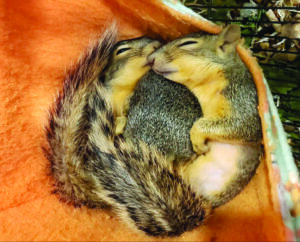
Photo by Rusty Spur Productions
The most common squirrels in North Texas are Eastern fox squirrels, the largest tree squirrels in North America (21 inches long and up to 2 lbs.). These athletic critters can run up to 20 mph and jump up to eight feet. Like all rodents, squirrels have four incisors that grow continuously, up to six inches per year. Rodents must gnaw on wood to file their teeth. The word “rodent” comes from the Latin verb rodere, meaning “to gnaw.”
The word “squirrel” comes from the Greek skiouros, meaning “shadow tail.” This tail is a multipurpose tool, acting as an umbrella, blanket, stabilizer (when leaping between branches), rudder for swimming and communication device. Quick jerks of the tail signal that squirrels are nervous or upset. Beyond their athletic prowess — running up to 20 mph and jumping eight feet — squirrels are vital “unwitting” foresters. By burying thousands of nuts each fall and locating them by smell, they inevitably leave some behind, which grow into the next generation of trees.
Squirrels lose about 25 percent of the nuts they bury to petty thieves (other squirrels or birds). To protect their stores, crafty critters practice deceptive caching: they dig fake holes and cover them up without depositing a nut. While the onlookers dig in the same place (and come up empty), the squirrel dashes off to his real hiding place.
When squirrels feel threatened, they run in zig-zag pattern to evade predators. While this strategy works well in the wild, it is dangerous on busy streets, so please slow down for our furry neighbors.
What to Do if You Find
a Baby Squirrel
The best thing to do for squirrel babies (if they’re not injured) is reunite them with their mother. A baby squirrel has the best chance of surviving if it’s raised by its mother. To determine what, if any, action to take, answer these questions:
Do any of these situations apply? The squirrel:
• Is bleeding or has an open wound or broken bone.
• Has been in a cat’s or dog’s mouth.
• Is covered in fly eggs (look like rice grains).
• Is cold, wet or crying nonstop.
If yes, take the squirrel (who’s likely injured or orphaned) to Sandy or another a wildlife rehabilitator. According to Romo, if a squirrel approaches you and runs up your pant leg, it desperately needs help. Although squirrels don’t carry rabies, it’s wise to wear gloves while handling them. Do NOT give injured or orphaned squirrels food or water. Doing so can kill the babies.
If a squirrel baby doesn’t appear to be injured, she needs to reunited with her mother. To do that:
Place the baby in a shallow box and put the box next to the tree he came from. If the box is too deep, the mother won’t jump in and get her baby. You can put a towel in the box but be sure the baby is visible on top of the towel. If it’s cold outside, lightly heat a water bottle or sock filled with rice and place it under the towel. You can put the box on a table near the tree to protect the squirrel from ground predators.
To attract the mother, play this YouTube video (baby squirrels crying) as loudly as you can on your phone or tablet: youtube.com/watch?v=oNOWVR1F9jo. Place the device next to the box and then go inside. Make sure NO pets or people are outside. Give mom an hour to come retrieve her baby. She will hear the crying noises and come back to get her baby (or multiple babies one by one). She will NOT come after dark. DO NOT leave squirrel babies outside at dark or overnight (so they don’t get eaten by predators).
If mom doesn’t come for her baby within an hour or when it gets dark, bring him inside and keep him warm and contained. DO NOT feed anything or give him water. Contact Romo or another wildlife rehabber immediately.
You can reach Sandy Romo at dfwsquirrelrescue@gmail.com or 757-288-2180 (call or text). Want to support Romo’s wildlife rescue efforts? Check out her Facebook page for donation links: facebook.com/SandyMarieRomo (About tab).

YouTube helps in squirrel rescue efforts added by whiterocklakeweeklyadmin on
View all posts by whiterocklakeweeklyadmin →