
By Rebecca Aguilar
Three life-size papier-mâché sculptures stand in the middle of the Día de Muertos art exhibit at the Bath House Cultural Center in Dallas. The trio depicts Maggie Wolter’s father as a child with his mother and sister in Oaxaca, Mexico.
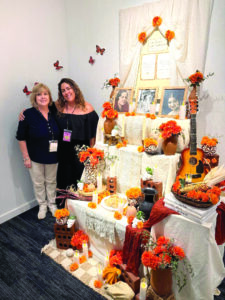
Photo by Rebecca Aguilar
“For me, Día de los Muertos is one of the best gifts Mexico has given the world because it doesn’t matter what religion you’re from; it’s for everyone, a day to remember loved ones who are no longer here with you,” said Wolter.
Día de los Muertos (Day of the Dead) celebrates the lives, memories and spirits of deceased family members and ancestors. The celebration is based on the belief that on November 1 and 2, the spirits of the departed return to the world of the living to spend time with their families.
Wolter’s sculpture is one of 80 art pieces on exhibit at the Bath House. Enrique Fernandez Cervantes curated the exhibition, inviting artists to imagine their departed family and friends in the afterlife.
Ernest Perez honored his grandparents with a bright, colorful acrylic painting of a skeletal couple dancing together in a romantic celebration of love, life and remembrance. He called it Baile Eterno, Eternal Dance.
“This is a memorial of my grandparents dancing the waltz back in the day. They would tell me stories about going on dates and dancing. This painting honors them,” Perez said.
Although his grandparents, Alfredo and Maria Sosa, have passed away, he wanted the public to see their devotion to each other in his artwork.
“My grandparents were married for 62 years, always inseparable, always together. I hope my painting shows people the love they had, especially when they were dancing the waltz.”
The dancing couple fits in perfectly with “They’re Having a Party!” theme of the 40th Anniversary exhibition.
Large sugar skulls, ceramics, acrylic and oil paintings, sculptures, fiber art, mixed media, photography and papier-mâché fill the Bathhouse Cultural galleries.
“Día de los Muertos is a perfect way to remember those who came before us and left us teachings and some kind of joy,” artist Ana Larranaga Campero said.
She and her mother built a tall, three-tier altar honoring her grandmother, great-grandmother and great-great-grandmother.
The altar displays vintage framed photographs of the three women, surrounded by marigold flowers, Mexican vases and a guitar. Campero says her grandmother would bring out the guitar at family gatherings and everyone would sing.
“This altar really represents my feminine lineage. I didn’t meet all these women, only one, but I feel them with me because I know they are part of my lineage, and part of my ancestors.”
Several altars in the exhibition feature offerings of food, drink and other personal objects to honor the spirits that return.
Lucy Bocanegra attended the exhibition on Sunday. She thought the artwork was inspiring. “It speaks out to you. So, when you see all these different artists and the art they share, it is inspiring.”
John Collins walked from room to room, amazed by the variety of art at the exhibition and learned that death is not only about grief. “Death is not final; it’s about thinking about our afterlife and not being forgotten, but celebrated. That warms my soul.”
Artist Ana Larranaga Campero feels honored to be included in this year’s show and hopes the public sees the afterlife as a way to reconnect with those who have left us.
“I think if people take away one thing, it is to remember where you come from, remember who you are, and honor the ones who came before you.”
The Día de Muertos exhibition is on view through November 7.

Día de los Muertos perfect way to remember those who came before added by whiterocklakeweeklyadmin on
View all posts by whiterocklakeweeklyadmin →