
Dr. Maria Montessori, an Italian physician and educator, is celebrated for her innovative educational method that mirrors how children naturally learn.
On January 6, 1907, she opened the Casa dei Bambini (Children’s House) in Rome, which quickly gained attention. Her extensive writing and travel led to the global spread of Montessori schools.
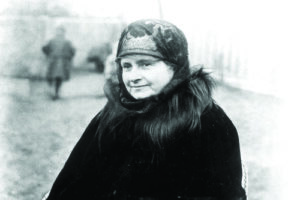
Photo courtesy of the American Montessori Society
Born on August 31, 1870, in Chiaravalle, Italy, Dr. Montessori was influenced by her well-educated mother and the rich educational environment of Rome. Her early immersion in libraries, museums and schools shaped her vision and passion for learning, guiding her to develop her renowned educational approach.
Maria Montessori, an exceptional student, defied traditional gender roles from an early age. At 13, she entered an all-boys technical institute to study engineering but later shifted to medicine.
Despite an initial rejection by the University of Rome’s medical program, Maria’s perseverance led to her admission after taking additional courses. She graduated in 1896 as one of Italy’s first female physicians, marking a significant achievement in a male-dominated field and showcasing her strength, dedication, and resilience.
Maria Montessori initially practiced psychiatry but soon shifted her focus to education, studying pedagogy and questioning existing methods for teaching children with intellectual and developmental disabilities.
In 1900, she became co-director of a new institute for special education teachers, applying scientific observation and experimentation. Her innovative methods led to notable improvements in many children, marking the program a success.
In 1907, Maria opened a full-day childcare center in San Lorenzo, Rome, for underserved children aged 3 to 7. This center, later known as the Casa dei Bambini, was Italy’s first of its kind. Despite initial challenges, the children thrived with Maria’s specially designed learning materials, demonstrating increased concentration and self-discipline.
The success of her methods led to widespread recognition, with Montessori schools opening across Western Europe and the United States, including the first American Montessori school in Tarrytown, NY, in 1911.
Following her initial successes, Maria Montessori dedicated her life to advancing her child-centered educational approach. She lectured extensively, wrote numerous articles and books, and developed a teacher training program for the Montessori Method. Her work, along with that of her followers, led to the global adoption of Montessori education.
As a prominent advocate for women’s rights, Maria used her platform to push for greater opportunities for women, gaining recognition as a leading feminist figure.
During turbulent times, she added peace education to the Montessori curriculum. In 1940, while in India, the outbreak of hostilities between Italy and Great Britain forced her into exile for the rest of World War II, during which she continued training teachers.
After the war, Maria returned to Europe and spent her final years in Amsterdam. She passed away peacefully in a friend’s garden on May 6, 1952.
Shared with permission from the American Montessori Society. Visit amshq.org.

Educator celebrated for child-centered approach added by whiterocklakeweeklyadmin on
View all posts by whiterocklakeweeklyadmin →