
By Beth Leermakers
October 16 was National Feral Cat Day. Alley Cat Allies created National Feral Cat Day to raise awareness about community cats (also called feral or stray cats), promote Trap-Neuter-Return (TNR), and empower people who care about cats and kittens to drive change on their behalf.
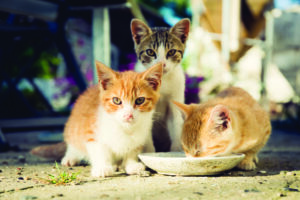
Photo courtesy of Forgotten Cats
TNR involves humanely trapping community cats, spay/neutering and vaccinating them, ear-tipping them for identification, and returning them to where they were found. This process prevents them from reproducing and eliminates yowling, fighting and marking. TNR is “the only proven, humane method to control outdoor cat populations,” according to Dallas Animal Services. Trapping and euthanizing feral cats was used for decades in the United States and has proven ineffective in controlling the cat population. When feral cats are removed from a neighborhood, other intact strays move in to fill the vacant territory, increasing the population.
If you want to help community cats in your neighborhood, start by contacting one of these organizations that partners with Dallas Animal Services to provide TNR resources:
Cat Matchers: catmatchers.org/resources/tnr/tnr.catmatchers@gmail.com. They can loan you a trap to transport a cat to be spayed/neutered).
Dallas Cat Lady: dallascatlady.org/; tnrdallascatlady@gmail.com; 214-766-6741 (Leigh, the president’s, number). They provide guidance on TNR.
Dallas Pets Alive: dallaspetsalive.org/pet-support/help-feral-stray-kittens/; https://dallaspetsalive.org/about/contact-us/; info@dallaspetsalive.org; 325-225-5372. They can help you trap a community cat.
Feral Friends: feralfriends.org/feral-cats/; feral@feralfriends.org; 866-865-6671. They offer low-cost sterilization, convenient clinic locations and humane traps, along with education and support.
TNR Tips:
Pay attention to the weather. Do NOT trap cats (or other animals) when the weather is or is forecasted to be extreme (cold, hot or heavy rain). A cat confined to a trap can’t seek shelter and is vulnerable to hypothermia, heatstroke or a drop in body temperature, respectively.
Establish a regular feeding schedule before trapping. To get the cats used to coming out and eating while you are there, feed the cats at the same time and place every day. Feed them as much as they can eat in a 30-minute period and then pick up any remaining food. To ensure that the cats will be hungry,
DON’T feed them the day or night before you are going to trap.
Borrow or buy a humane cat trap. Cat Matchers and Feral Friends can loan you a trap for TNR. You can buy humane traps at Home Depot or Tractor Supply Co. (or other feed stores) and online from Havahart, Trucatch and Tomahawk.
Make a spay/neuter appointment before you trap the cats. You might have only one chance to successfully trap a cat. Feral cats become wary of traps, so if you trap cats and then release them, it is unlikely that you will be able to catch them again. Free or low-cost spay/neuter surgery for feral/community cats is available at Spay Neuter Network (spayneuternet.org/feral-cats/; 972-472-3500) and Texas Coalition for Animal Protection (texasforthem.org/feral-fix-program; TCAP provides — at no cost — the first 12 sterilizations of Feral Cats (wild, untouchable cats only) each day beginning at 8 a.m. — arrive before 8 a.m. to get a spot; or you can make an appointment and pay $20 to have a feral cat fixed). Feral Friends also has a network of DFW-area veterinarians that participate in their Feral Spay/Neuter Program (appointments are required).
Trap the cat(s). Visit the Alley Cat Allies website for step-by-step instructions for trapping: alleycat.org/resources/how-to-help-community-cats-a-step-by-step-guide-to-trap-neuter-return/. Label the trap: “TNR in progress,” with your name/phone number. Do NOT pick up or handle a community cat — even a kitten. A cat with no vaccination record could be killed for rabies testing if a person is bitten! Cats should not eat after midnight the night before surgery.
Provide an indoor place for the cat to recover from surgery. Cats who are recovering from anesthesia can’t regulate their body temperature, so keep them in an indoor, temperature-controlled area (such as a bathroom) that’s quiet and inaccessible to other animals. In most cases, you will hold the cats overnight after surgery and return them the following morning, according to Best Friends (bestfriends.org/pet-care-resources/how-use-humane-cat-traps-tnvr).
Want to help community cats without taking on the responsibility of trapping them? The organizations listed above need volunteers and donations to support their TNR and (domestic cat) adoption programs.
Thank you for making a difference in a community cat’s life!

Feral cats get first-class treatment during TNR added by whiterocklakeweeklyadmin on
View all posts by whiterocklakeweeklyadmin →