
By Beth Leermakers
Pet care has gone high tech. From tracking a dog’s location to feeding cats on a customized schedule, smart gadgets are making it easier to keep companion animals safe, healthy and happy. Pet parents are embracing this technology. A recent survey of 500 U.S. adults found that 87 percent of pet owners said technology enhances their ability to care for their pets. Most pet parents would use a tracking device to monitor a pet’s location (88 percent), a pet camera while away (89 percent), and technology to monitor health and activity (79 percent).
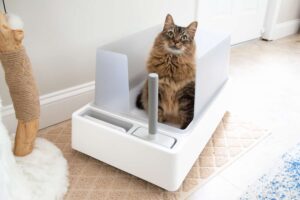
Photo courtesy of DM Communications
Here are a few gadgets that protect cats and dogs, monitor their health, and keep them entertained. Disclaimer: there are many products available in each category. I mention a few products that are highly rated/recommended in online reviews.
Self-cleaning litter boxes. These automated systems remove waste after each use, reducing odors and eliminating the need for daily scooping. If you want to keep an eye on your cats, the Whisker Litter Robot LR5 Pro features dual integrated cameras that provide real-time video monitoring (with a Whisker subscription). The Litter-Robot 5 (no cameras) and Litter-Robot 4 offer reliable cleaning with fewer bells and whistles. By automating one of the least pleasant cat care chores, these devices save time while maintaining a cleaner environment for cats and their people.
Automatic cat feeders. Automatic feeders deliver meals on a reliable schedule, even when you’re at work or traveling. Gravity-based feeders offer simple and affordable solutions for dispensing dry food, while programmable feeders let you control portion sizes and feeding times.
More advanced smart feeders connect to mobile apps, so you can adjust feeding schedules remotely and receive refill alerts. Some models even include built-in cameras so you can monitor your kitty’s eating. By controlling portions, smart feeders can support weight management, specialized diets and long-term pet health.
GPS trackers. GPS trackers let you monitor your pet’s location in real time. These trackers use mobile networks to transmit location data directly to a smartphone, helping you find your cat or dog if she wanders off or becomes lost. Your pet should still be microchipped (required in Dallas), even if she wears a GPS tracker.
The Tractive Smart Dog tracker (requires a subscription) was highly rated in several reviews, praised for its location accuracy and long battery life, but it may be too bulky for small dogs. There is also a Tractive Smart Cat Tracker for cats 6 1/2 pounds or heavier (would probably work for little dogs too). The Fi Series offers a lower-profile collar (better for smaller dogs) and includes additional health monitoring features, though the subscription is more expensive. Fi also has a mini tracker for cats. While GPS trackers cannot replace a secure fence, supervision and proper recall training (for off-leash activities, where permitted), they serve as valuable safety tools.
Wearable health trackers. Like a Fitbit for pets, these devices monitor activity levels, sleep patterns, heart rate and respiratory trends. Over time, the technology learns your pet’s normal behavior patterns, helping detect early signs of potential health problems. You can share this information with your veterinarian, allowing for earlier diagnosis and treatment. By encouraging active lifestyles and identifying health concerns early, wearable devices help improve overall pet wellness.
The PetPace Dog Health Monitor V3.0 (requires a subscription) has sensors to track activity, sleep, pulse, respiration and temperature. Its companion app makes it easy to see whether your pup’s health metrics are in the normal range.
This collar can help manage allergies, cancer, heart disease, infections, respiratory issues, and urological problems. The PetPace V3.0 Cat Health Monitor (requires a subscription) tracks heart rate, breathing, temperature, pulse, activity, sleep, and heart rate variability with medical-grade accuracy. AI-driven analytics detect subtle changes in wellness or behavior to support proactive care, and the device also helps with post-procedure recovery or chronic condition monitoring.
Pet cameras. Do you ever wonder how your pet spends her time while you’re not home? If you want to see, talk to and even reward your cat or dog remotely, the Furbo 360° camera is your go-to gadget. The rotating camera tracks pets throughout a room and features high-definition video, two-way audio, motion alerts and night vision. The treat-dispensing feature can help reduce separation anxiety and keep pets engaged while owners are away.
Automatic ball launcher. If you have an energetic, ball-crazy dog and get tired of throwing the ball 100 times (and chasing after it when he doesn’t return it), you need this gizmo.
The PetSafe Automatic Ball Launcher delivers a hands-free fetch game that encourages exercise and mental stimulation. With nine distance settings and six angles, this machine is suitable for indoor and outdoor activity. What a great way to tire out your dog when it’s too cold or hot to play outside! Built-in safety sensors prevent the machine from launching balls if a pet or person is standing too close.
Technology is making it easier to care for our four-legged family members. While no device can replace love, attention and regular veterinary care, smart technology can help us stay more connected to our pets’ needs and well-being.

New technology making pet care easier added by whiterocklakeweeklyadmin on
View all posts by whiterocklakeweeklyadmin →