
By Beth Leermakers
Does your cat or dog need to see a dentist? Maybe. Dental disease in pets is more common — and more serious — than most pet parents realize. In 2023, 7 percent of dogs and 64 percent of cats seen at Banfield Hospital were diagnosed with dental-related issues. By age three, 80 percent of dogs and 70 percent of cats show signs of dental disease, according to Texas Coalition for Animal Protection (TCAP). Cats are highly susceptible, with periodontal disease one of the most common health issues seen in adult felines.
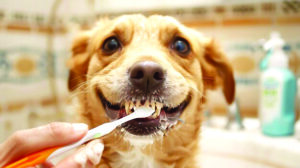
Photo courtesy of Greenpoint Vet Care
Because periodontal disease develops gradually and often progresses without obvious symptoms, many pet parents don’t know their fur kid is suffering from chronic oral pain and infection. Periodontal disease doesn’t just damage your pet’s mouth; it’s associated with other serious health problems.
Periodontal disease starts with plaque, a sticky film of bacteria that constantly forms on the teeth. If plaque isn’t removed through regular brushing or professional dental care, it hardens into tartar. Tartar above the gumline is often visible as a yellow or brown buildup on the teeth, but the more serious damage occurs below the gumline. Plaque and tartar below the gumline cause infection and damage to the jawbone and tissues that connect the tooth to the jawbone.
As periodontal disease advances, pets may develop bad breath, red or bleeding gums, loose or missing teeth, difficulty chewing, drooling, reduced appetite or pain when eating. Some pets show only subtle signs, such as preferring soft food, dropping food from their mouths, or becoming less playful and interactive. Because animals instinctively hide pain, your cat or dog may have significant dental disease even when her symptoms seem mild.
Smaller dogs are at greater risk. While dental disease affects dogs of all sizes, small dogs tend to develop dental problems earlier and more severely than larger dogs. Small dogs often have the same number of teeth as bigger dogs, but in a much smaller jaw — causing overcrowding that makes plaque and tartar build up more easily. A review of more than three million dog medical records from Banfield Pet Hospital found that extra-small breeds (< 14.3 lbs.) were up to five times more likely to be diagnosed with periodontal disease than giant breeds (> 55 lbs.). The dog breeds most frequently diagnosed with periodontal disease were in the extra-small, small (14-19.8 lbs.) and medium-small (20-33 lbs.) categories. Other risk factors for periodontal disease included a dog’s age, being overweight and time since last scale and polish.
According to the American Veterinary Medical Association: “Early detection and treatment are critical, because advanced periodontal disease can cause severe problems and pain for your pet. Periodontal disease doesn’t just affect your pet’s mouth. Other health problems found in association with periodontal disease include kidney, liver and heart muscle changes.” Proper dental care can add three to five years to your pet’s life, according to TCAP. Your pet’s teeth and gums should be checked at least once a year by your veterinarian to detect early signs of problems and keep your pet’s mouth healthy.
The most effective treatment for periodontal disease is a professional dental cleaning performed by a veterinarian or board-certified veterinary dentist under general anesthesia. Anesthesia makes it possible to perform the dental procedures with less stress and pain for your pet. Anesthesia allows for a better cleaning because your pet is not moving around and risking injury from the dental equipment.
A dental cleaning begins with an oral exam of the pet’s mouth. Dental X-rays may be needed to evaluate the health of the jaw and tooth roots beneath the gumline. Dental cleaning includes scaling (to remove dental plaque and tartar) and polishing. Extractions may be required.
The American Veterinary Dental College does not recommend dental cleanings without anesthesia because they do not allow cleaning or inspection below the gumline, where most dental disease occurs, and they can result in injury to the pet or the person performing the procedure.
Affordable Dental Cleaning in DFW
Legacy Humane Veterinary Clinic. LHVC (5121 Collin McKinney Parkway, Ste 1200, McKinney, TX 75070; 214-494-0045: lhvc.co/services) performs dental cleanings under anesthesia by appointment. Dental cleaning is $220 for cats and $250-$330 for dogs (based on weight). Pain meds and antibiotics to go home are additional. Dental extractions are $10 (minor), $65 (major), with a $200 maximum for extractions.
Spay Neuter Network in Fort Worth. SNN (spayneuternet.org/programs-and-specials/community-pet-care-program/; 972-472-3500) offers dental services (teeth scaling and polish, extractions) for cats and dogs from 1-7 years old. This service is for mild to moderate tarter. SNN’s $200 fee includes pre-dental exam, anesthesia, routine dental and polish and take-home antibiotics. Additional fees may apply if extractions are needed.
Texas Coalition for Animal Protection. TCAP (texasforthem.org/services/canine-and-feline-dental-cleanings/; 940-566-5551) performs dental cleaning (under anesthesia) at eight clinic locations in the DFW area, including Garland, Arlington, Allen, Hurst and Fort Worth. The cost ranges from $165 to $205, depending on the stage of dental disease, plus $10 to $60 for each extraction. The total cost of a dental cleaning will never exceed $450. Pets that are good candidates for TCAP dental cleanings are: < 100 lbs.; < 10 years old and sterilized if < five years; and free from pre-existing health conditions.
Just like humans, pets need to take care of their teeth, too! But they can’t hold a toothbrush. It’s up to pet parents to help maintain a pet’s healthy mouth.

Dental disease can be avoided in pets added by whiterocklakeweeklyadmin on
View all posts by whiterocklakeweeklyadmin →