
By Shari Goldstein Stern
Until a few years ago, Bobalu Kaiser and his big brother, Will, were running marathons, including those in San Francisco, Boston and at home in the BMW Marathon, formerly the White Rock Marathon. It was a passion they shared and a significant bond between them.
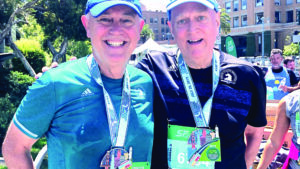
Photos courtesy of Bobalu Kaiser
All that changed when Will contracted COVID-19, which led to a series of additional health issues, and he became a quadriplegic. He withstood multiple strokes, a cerebral hemorrhage and an unusual condition called a cytokine storm, in which immune cells attack the body’s organs. He was on a ventilator for 60 days.
Then, three years ago, when Bobalu dropped in on Will at his apartment, he found him on the floor, after suffering a fall out of bed. Unable to manipulate his body to move himself, he remained helpless. Will had major injuries to his head from the fall.
“We gotta’ figure this out,” Bobalu (pronounced Bob-a-loo) told his big brother, determined to create a way for his sibling to call for help.
Bobalu — a businessman, educator and engineer — began devoting his time and energy experimenting with the design of a novice device called “Will-Call,” a voice-activated call system for patients unable to operate traditional push-button alerts. He soon sought expert advice.
At the University of Texas at Dallas (UTD), Bobalu presented a challenging project to the innovative Senior Capstone program. “UTDesign Capstone is a pioneering program that facilitates dynamic academia-industry collaboration,” the UTD website explains. “Our program assembles teams of four to six students, providing companies with a unique opportunity to harness their talents, fresh perspectives and cutting-edge solutions.”
Inspired by the opportunity, Bobalu told the students: “I know this thing, this ‘Will-Call’ might work with Alexa and Siri,” the engineer explained to the students. “But y’all are way smarter than me. You don’t want it to work with Wi-Fi, which goes out all the time. So how do I make it work?”
Capstone students quickly gave Bobalu a prototype. Together, they all fine-tuned the product. Bobalu then hired some of those UTD Capstone students to help with production.
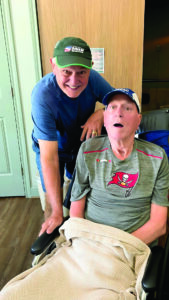
The inventor’s career has spanned diverse fields, including high-tech, finance and healthcare. Bobalu earned a BS in Engineering from Purdue University, an MA in Negotiation from Southern Methodist University and a PhD in Learning Technologies from the University of North Texas.
Bobalu and his wife of almost 40 years, Ginger, are parents of three sons and a daughter. Bobalu said his proudest accomplishments in life are his eight grandchildren.
Will lived in China, following a lengthy career as a CPA. He worked as a private tutor there. The graduate of Indiana University has four children who live in California and Florida.
The Kaiser brothers grew up on the south side of Indianapolis.
Will and Bobalu discuss Will’s understanding of his life at length. “He knows he has a difficult path to the end,” Bobalu said. “At the same time, he knows he can make a difference for other people. He derives immense joy and satisfaction from helping others,”
Will, who was his baby brother’s inspiration for inventing the Will-Call device, joined full force in developing a strategy to get the badly needed call system into the hands of those who require it. “Will receives countless notes and testimonials, which make a huge difference in his outlook,” Bobalu said.
For additional information, visit Will-call-nurse.com

Local man finds calling helping brother added by whiterocklakeweeklyadmin on
View all posts by whiterocklakeweeklyadmin →